City’s R796m Cape Flats Bulk Sewer rehabilitation on track
19 June 2024
The City’s Water and Sanitation Directorate is making significant progress with South Africa’s largest sewer upgrade of its kind, rehabilitating 28km of bulk sewer pipelines. This project aims to improve sanitation services for approximately 275 000 households in Athlone, Hanover Park, Lotus River, Ottery, Grassy Park, Eagle Park, Pelican Park and surrounding areas.
To date, 25% (7kms) of this extensive, multi-phase sewer rehabilitation has been successfully completed. The remainder of the work is ongoing and is expected to be completed by 2025, if all goes as planned.
This bulk sewer serves an estimated 8 000-hectare catchment area across the Cape Flats. It also provides a critical link to transfer flow between two bulk wastewater catchment areas. A significant portion of the inflow originates from the Raapenberg and Bridgetown pump stations, extending approximately 14 km to the Cape Flats Wastewater Treatment Works.
 'This is one of the City's flagship sewer rehabilitation projects and we are pleased with the significant progress that has already been made. It will extend this infrastructure's lifespan by an estimated 100 years to the benefit of our residents.
'The City has invested R230 million for the current 2023/24 financial year and will invest another R263 million over the next two financial years. The aim is to build resilient sewer infrastructure through the sewer pipe replacement program to provide dignified services to our communities,' said the City's Mayoral Committee Member for Water and Sanitation, Councillor Zahid Badroodien.
Since the Cape Flats Bulk Sewers were originally built in the 1960s, residential and business areas have expanded. Maintaining the credibility of this infrastructure is crucial for it to continue functioning effectively, benefiting the public not only today but for years to come.
 This extensive rehabilitation is vital because:
- The City's infrastructure will be able to accommodate more sewage flow from the increasingly populated areas it services, future-proofing it for an ever growing city
- It will help restore the structural integrity of the pipes, preventing leaks and groundwater ingress, so that the system can continue conveying sewage from properties to pump stations and wastewater treatment works
- It will also protect the internal surfaces of the concrete pipes from more corrosion, which is naturally caused by hydrogen sulphide gas that is released from oxidised sewage
- The existing sewer manholes will also be rehabilitated
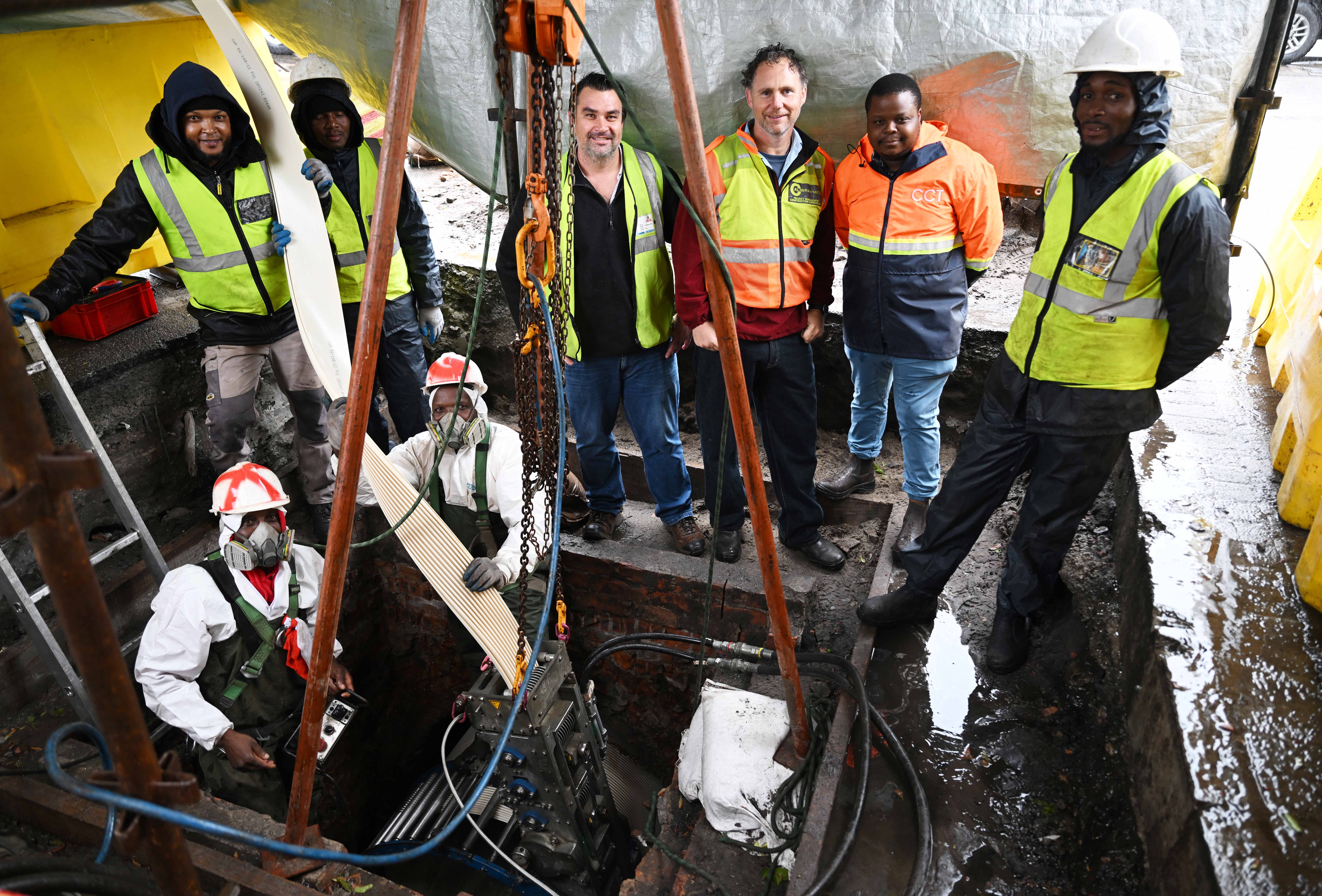
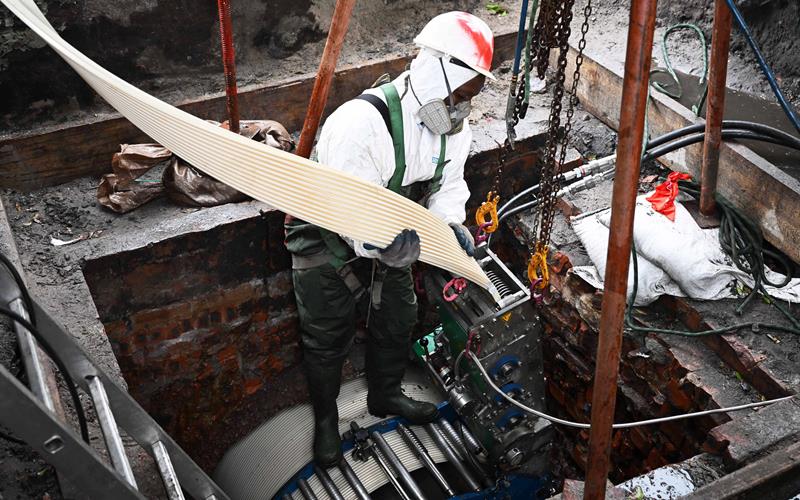
Besides using trenchless technology, which ensures that work is able to continue with minimal disruptions to residents and business in the area, this project sets itself apart from other projects of its kind. The only visible sign that work of this magnitude is being carried out is in the form of some staff and vehicles at manhole access points. Meanwhile underground, the pipeline is profiled by a robotic crawler, which uses lasers to record the state of the inside of the pipe. Data is then sent to officials above ground who are able to determine exactly which method to use for rehabilitation.
There are varying trenchless methods available, however with this project, Spirally Wound Pipes (SWP) is used. SWP is especially imported from SWP Systems GmbH Germany and meets ASTM F1697-18 standard, which is guaranteed to last up to 100 years. The lining consists of a single, continuous strip of PVC, which is spirally wound into the existing pipeline via a winding machine, positioned at the base of an existing manhole or access chamber. This process creates a single continuous PVC pipe in the existing host pipe. Once completed, the robotic crawler is used again to ensure that work has been completed in a satisfactory manner.
Published by:
Media Office, City of Cape Town